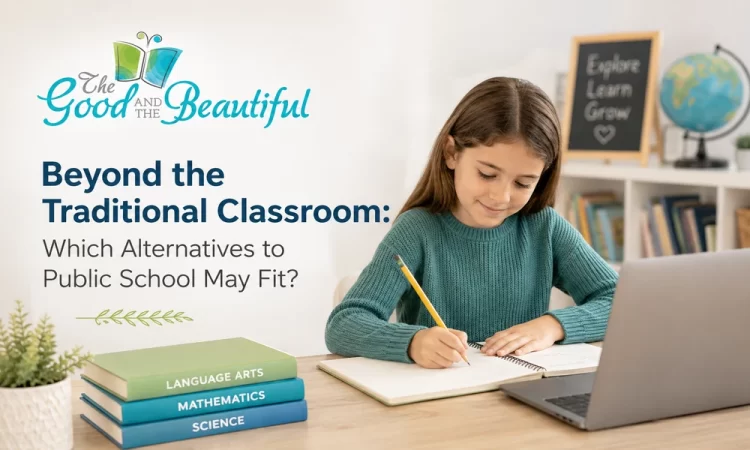
Beyond the Traditional Classroom: Which Alternatives to Public School May Fit?

School is not just finding a place with classrooms and teachers. Instead, it is about where a student can learn effectively, thrive socially, and acquire the skills to be productive. Some families it’s just simply not the right fit for. This is why examining alternatives to public school can be very helpful in your deliberation.
When Your Child Requires Added Flexibility
Some learns best without a strict schedule each day. They could require a little extra time for some subjects or have commitments that make a conventional school schedule challenging.
The pace and time of the lessons can be more tightly controlled with homeschooling. The parent can create the schedule around the needs of the child and modify it once those needs change.
Another option is online education, which may provide some flexibility as well. Students may take live classes, recorded lessons, or a combination of both, depending on the program.
If Smaller Classes Matter
Some kids get involved more when teachers are able to be closer.
A private school may have smaller classes or different ratios of teachers to students, but not all schools have that option. Private schools can also offer unique programs, help with extra-curricular activities, and specific educational philosophy.
Families are rightfully concerned about tuition, so the full cost is usually disclosed before enrollment.
If Your Child Loves to Learn by Doing
This works for students who are experimental, building, creating, or doing projects.
This is where deemed to be wise education models and the like should maybe come into play. Some programs, like Montessori, include more hands-on activities and allow students to work more independently.
Schools that follow a project-based approach are another option for children who are keen on practical problem-solving instead of just relying on the traditional lessons and tests.
If You Want a Different Public-School Model
Not all of those have public education options that work the same way.
Charter schools receive public funds but have more autonomy, according to local law. Some cater to certain content areas like science, technology, performing arts, or those prepping for college.
Families pursuing alternatives to public school might look into charter schools as well, along with private and home-based choices.
What If You Need to Provide a More Personalized Approach?
All students do not learn at the same speed, and some are lost with accelerated lessons. Some would require extra support with academics, some need harder work.
Flexible education model can even make it easier to adjust instruction. Parents should carefully compare the ways each school or program offers different learning needs.
Ask about:
Choose for Your Child
When it comes to comparing alternatives to public school, there is no one-size-fits-all answer. The best one for your child is the style (and method) that align with his/her learning attributes, your family resources, and educational goals.
Do your homework on different models, tour schools when you can, ask pointed questions, and contrast the day-to-day experience. An appropriate selection can help develop a learning environment through which your child is more likely to remain curious, confident, and engaged.