
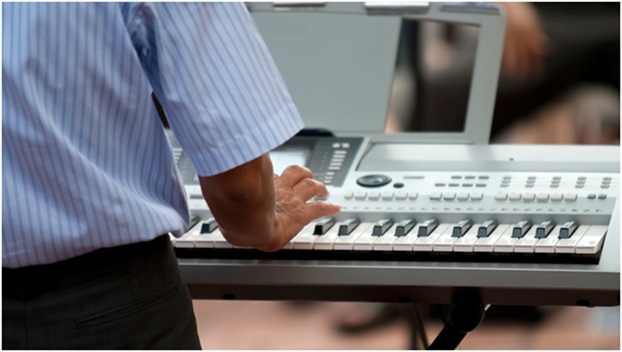
Finger independence is a fundamental skill that gives keyboardists the freedom to tackle complex pieces, play with clarity, and express musical ideas fully. If your fingers sometimes feel locked together or sluggish, don’t worry — independence can be trained. Here’s an in-depth look at proven techniques and exercises to help you build control and dexterity across all fingers.
1. Hanon, Czerny & Beyond
Classic technical studies like Hanon’s “The Virtuoso Pianist” and Czerny’s “School of Velocity” are designed to target finger strength and separation. They focus on repetitive patterns that train your fingers to move evenly and independently.
Practice tips:
- Start slow to ensure accuracy.
- Keep hands relaxed; avoid stiffness.
- Gradually increase tempo only when the passage is clean and controlled.
Bonus: Add accents to specific fingers within exercises to further isolate and strengthen them.
2. Isolate Hands and Fingers
Practicing scales and arpeggios with each hand separately helps you focus on finger motion and control. When hands are combined too soon, weaker fingers can hide behind stronger ones.
Focus on:
- Even tone across all fingers.
- Smooth transitions, especially with the 4th and 5th fingers.
- Consistent finger curvature and hand shape.
3. Contrary Motion Scales
Contrary motion forces your brain and hands to work independently as they move in opposite directions. This trains coordination and focus.
Pro tip: Begin with C major and progress to other keys once confident. Play with both even and varied dynamics for additional challenge.
4. Rhythmic Variations
Adding rhythm challenges, like playing dotted notes in one hand and straight notes in the other, builds hand and finger independence while improving your internal sense of time.
Ideas to try:
- Triplets in one hand against eighth notes in the other.
- Swapping rhythm patterns between hands.
5. Two-Part Inventions
Bach’s Two-Part Inventions are masterclasses in finger independence. Each hand plays a distinct melody, teaching you to think polyphonically.
How to practice:
- Learn each hand’s part separately.
- Focus on even tone, phrasing, and articulation.
- Combine slowly, paying attention to the interaction between voices.
6. Finger Isolation Drills
Spend extra time on the ring and pinky fingers, as they tend to be weaker. Simple exercises like holding down three fingers while lifting and lowering the remaining fingers can help.
Tip: Avoid pressing hard — work for precision and relaxed motion.
7. Explore Repertoire That Demands Independence
Pieces where hands play different rhythms or roles — like left-hand accompaniments with right-hand melodies — help apply finger independence in a musical context.
Examples: Ragtime, jazz comping patterns, and complex classical pieces.
8. Short, Focused Daily Drills
Consistency beats duration. Ten minutes of dedicated finger-independence practice daily yields better results than sporadic long sessions.
End with a piece or improvisation to apply what you’ve strengthened.
Additional Pro Strategies
- Use a mirror or video to check for unwanted hand tension.
- Vary dynamics in exercises to practice control at all volumes.
- Explore tools like weighted key exercises carefully — with guidance — to build strength safely.
If you’re serious about developing these skills further, structured programs designed to help you earn a keyboard playing degree provide comprehensive training that covers finger independence, technique, interpretation, and live performance.